The Blue Zone Breakfast: Why the World's Healthiest People Skip the Sweet Start
Close your eyes and picture a classic healthy breakfast. You probably imagine a bowl of whole-grain cereal, a glass of fresh-squeezed orange juice, and perhaps a slice of toast with jam. For decades, food companies have marketed this sweet, carbohydrate-heavy start as the ultimate way to fuel your day.
But if you look at the longest-living people on Earth, you will find that they almost never eat breakfast this way.
In the world’s Blue Zones (regions like Okinawa in Japan and Sardinia in Italy, where people regularly live healthy lives past the age of one hundred) mornings look very different. Their breakfasts are not sweet, fast, or processed.
Instead, they are quiet, savory, and centered around whole foods.
Here is the metabolic science of why your morning meal dictates your blood sugar for the next twelve hours, the danger of the sweet breakfast, and how to adopt the Blue Zone approach for steady energy and longevity.
The First Domino of Your Metabolism
Why does your first meal of the day carry so much biological weight? It comes down to a metabolic concept known as the second-meal effect.
Think of your daily blood sugar control as a row of standing dominoes. The very first meal you eat in the morning tips the first domino, setting the insulin sensitivity and glycemic response for every subsequent meal you eat for the next twelve hours:
- The Sweet Start: When you consume high-sugar or refined carbohydrate foods (like cereal, pastries, or fruit juice) on an empty stomach, you trigger a rapid spike in blood glucose. Your pancreas responds by pumping out a large dose of insulin to clear the sugar. This causes a blood sugar crash a few hours later, driving intense cravings, afternoon fatigue, and a state of insulin resistance that makes your lunch and dinner spike your blood sugar even higher.
- The Savory Start: When you start your day with a low-glycemic, fiber-rich, and protein-packed meal, you keep your insulin levels stable. This slow, steady release of energy maintains your insulin sensitivity, meaning that your body can process the carbohydrates you eat later in the day much more efficiently.
By choosing a savory, low-sugar breakfast, you keep your metabolic dominoes standing steady, leading to consistent energy levels and reduced snacking.
What a Blue Zone Breakfast Looks Like
In traditional Blue Zone cultures, breakfast is treated as a savory extension of dinner rather than a dessert-like treat.
In Okinawa, Japan
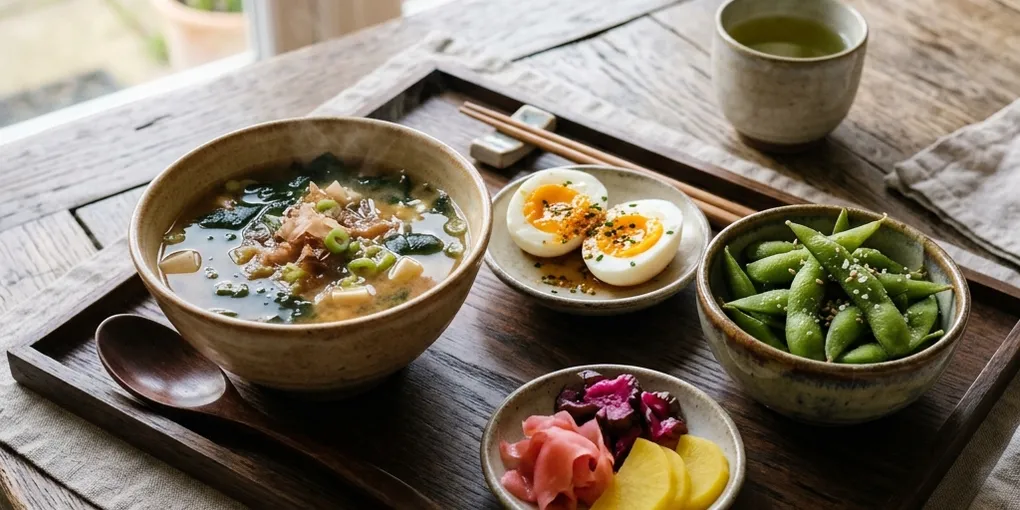
A typical morning meal might consist of warm miso soup, pickled vegetables, a small serving of rice, edamame or natto (fermented soybeans), and occasionally green tea. This plate is incredibly rich in minerals, plant-based proteins, and beneficial gut microbes from the fermented foods.
In Sardinia, Italy
Mornings might feature sourdough bread made from ancient grains (which contains slow-digesting starches), a slice of pecorino cheese (rich in healthy fats and protein), fresh tomatoes, and farm-fresh eggs.
These traditional meals are:
- Low-Glycemic: They contain virtually no added sugars, preventing insulin spikes.
- High-Fiber: Fiber slows down digestion, ensuring a slow, steady release of glucose into the bloodstream.
- Rich in Fermented Foods: Fermented items support gut health, which is directly linked to metabolic efficiency and immune function.
- Protein-Forward: Protein stimulates satiety hormones, keeping you full and focused until lunch.
How to Build a Blue Zone Breakfast Tomorrow
You do not need to move to Okinawa or Sardinia to adopt their longevity secrets. You can easily replicate a Blue Zone breakfast using simple ingredients from your local grocery store:
- Skip the Juice: Fruit juice is a concentrated dose of liquid fructose without the buffering fiber. Swap it for clean water, black coffee, or unsweetened green tea.
- Add Fermented Veggies: Include a spoonful of sauerkraut, kimchi, or pickled cucumbers next to your morning eggs. The fermentation supports digestion and adds a savory punch.
- Prioritize Clean Protein: Build your plate around eggs, organic tofu, a handful of nuts, or a serving of beans.
- Embrace Leftovers: Do not be afraid to eat savory leftovers from dinner for breakfast. A bowl of vegetable soup or a chicken and avocado wrap makes a far better breakfast than a sweet muffin.
Your morning choices set the trajectory for your entire metabolic day. Skip the sweet breakfast crash, choose a savory, fiber-first plate tomorrow, and experience steady energy that lasts all day.