Is Your 'Healthy' Breakfast Secretly a Glucose Bomb? The Science of Food Sequencing
It sounds like clickbait, but it’s a biological reality: eating a plain bowl of oats for breakfast can actually be worse for your metabolic health than eating a slice of pizza.
If you are terrified of hidden sugars, constantly trying to decode food labels, and finding yourself exhausted and starving by 11:00 AM despite eating a “clean” breakfast, you are likely falling into the naked carb trap.
Oats are healthy. Bananas are healthy. Whole-wheat toast is healthy.
But when you eat them alone, you turn these nutrient-dense foods into metabolic sugar bombs.
Here is the science behind why naked carbohydrates trigger massive blood sugar spikes, the physics of “food sequencing,” and the simple, daily tweaks you can make tomorrow to keep your energy rock-solid all day.
The Naked Carb Trap: Why “Clean” Meals Spike Your Glucose
To understand why a bowl of oatmeal can spike your blood sugar faster than pizza, we have to look at how your digestive system processes different macronutrients.
Carbohydrates (like the starches in oats or the fructose in a banana) are quickly broken down by enzymes in your mouth and stomach into glucose. When you eat carbohydrates on an empty stomach with no other nutrients present:
- Rapid Gastric Emptying: The stomach liquefies the carbs and dumps them rapidly into your small intestine.
- Immediate Absorption: The cells lining your small intestine absorb the glucose into your bloodstream almost immediately.
- The Insulin Surge: Your pancreas must release a massive wave of insulin to clear the glucose from your blood, leading to a rapid drop in blood sugar - the classic mid-morning energy crash.
Now, consider a slice of pizza. While pizza is made with refined white flour (a fast-digesting carb), it is also topped with cheese and meat. The cheese contains fats and proteins.
Because fat and protein take much longer to digest, they delay gastric emptying. The stomach releases the food slowly, which means the carbohydrates are absorbed into the bloodstream gradually. While pizza isn’t a “health food,” its protein and fat content creates a flatter, more stable glucose curve than a bowl of instant oatmeal eaten plain.
The Highway Analogy: Visualizing Glucose Flow
To visualize how your body handles food, think of glucose molecules as cars merging onto a busy highway (your bloodstream).
- The Naked Carb Scenario (No Ramp Light): Eating oats or fruit alone is like a straight, unrestricted on-ramp during rush hour. All the cars dump onto the highway at the exact same moment, causing a massive, chaotic traffic jam (a glucose spike).
- The Sequenced Scenario (The Metering Light): Adding fiber, fats, and proteins before or alongside your carbs acts like a ramp metering light. It pulses the cars, forcing them to merge onto the highway one by one, creating a smooth, steady flow of traffic (a stable glucose curve).
By introducing barriers that slow down digestion, you prevent the metabolic chaos that leads to cravings, fatigue, and fat storage.
Food Sequencing: Shock to Sequence
You don’t need to eliminate carbohydrates or banish oatmeal from your kitchen. You simply need to change the order in which you eat your food - a practice known as food sequencing.
Clinical studies show that consuming fiber and protein before carbohydrates can reduce post-meal glucose spikes by up to 30–40% and lower the overall insulin response.
To fix your breakfast tomorrow, use these simple sequence swaps:
Option A: The “Before” Strategy (Eat First, Carbs Second)
Before you touch your oatmeal or fruit, consume a small serving of protein or healthy fats to prime your digestive tract:
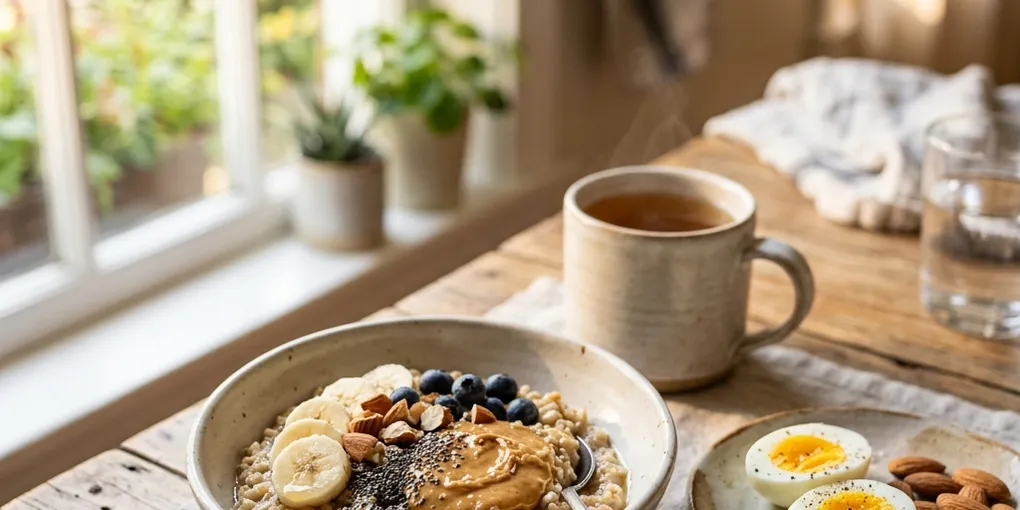
- Eggs First: Eat two scrambled or boiled eggs before you eat your oats.
- Yogurt First: Eat a few spoonfuls of unsweetened Greek yogurt.
- Nuts First: Eat a handful of almonds, walnuts, or pecans.
Option B: The “Blend” Strategy (Mix In Fats and Fibers)
If you prefer a single-bowl breakfast, stir healthy fats and structural fibers directly into your oatmeal to slow down carb absorption:
- Add Chia or Flaxseeds: Chia seeds form a soluble gel barrier in your gut that slows down glucose absorption.
- Add Nut Butter: A tablespoon of natural peanut butter or almond butter adds high-quality fats and protein.
Support Your Metabolic Base: Gluco6
While food sequencing is a highly effective mechanical tool to control glucose curves, supporting your body’s cellular insulin sensitivity can amplify these benefits.
For those seeking targeted support for healthy blood sugar ranges, incorporating a premium metabolic formula like Gluco6 can be a powerful addition. Gluco6 is designed with natural ingredients to support healthy glucose levels, enhance insulin receptor sensitivity, and promote stable energy throughout the day.
You can learn more about the formula here: Check out Gluco6
Your Tomorrow Morning Routine
Ready to try food sequencing? Use this checklist to optimize your breakfast tomorrow:
- Step 1: Drink a glass of water upon waking.
- Step 2: Prepare your protein/fat source (e.g., eggs, Greek yogurt, or nuts).
- Step 3: Eat your protein/fat source first to coat your digestive tract.
- Step 4: Enjoy your oatmeal or banana, knowing the glucose will merge smoothly.
- Step 5: Monitor your energy levels at 11:00 AM - notice the absence of the mid-morning crash.
By making this single adjustment to your breakfast sequence, you take control of your metabolic health. Stop starving your body and start sequencing your plates.